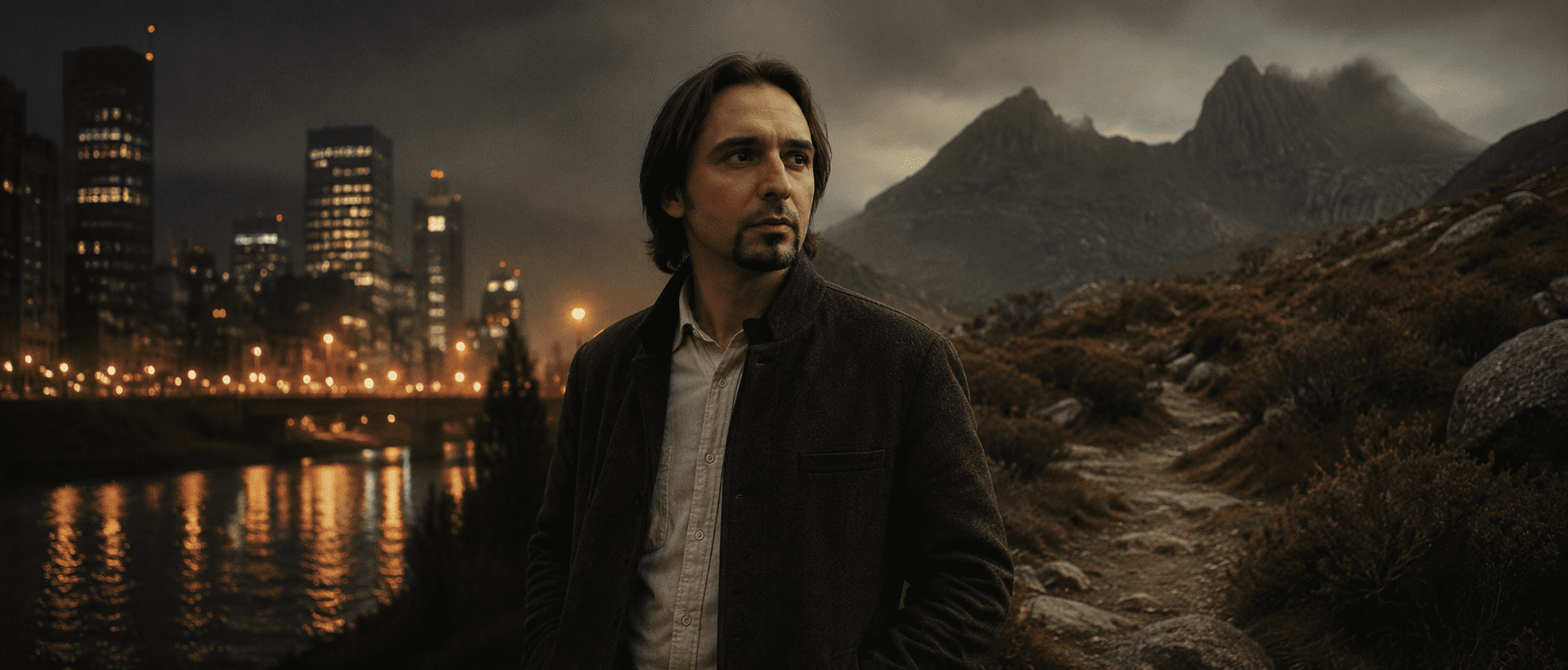
What if the life you were taught to pursue was built on the wrong idea of happiness?
Before a person can find happiness, he may first have to ask whether the happiness he inherited is true.
What is happiness?
Rental access is for 30 days. Purchase is for ongoing personal digital access. Both include bonus access to the iReawaken Experience.
About the Film
A documentary about the false maps of happiness that shape modern life.
DeINCEPTION is a philosophical documentary by John Angheli. It moves from a near-fatal accident, into a 40-day wilderness ordeal in Tasmania, and toward the question that sits inside desire, ambition, suffering, freedom, and the good life.
It does not begin with a technique for feeling better. It begins with the deeper question: what kind of happiness is true enough to live by?
The Happiness We Were Sold
The age we live in does not simply offer comfort and choice.
It teaches us to treat comfort, pleasure, self-expression, stimulation, and success as the shape of the good life.
Entertained, but not nourished.
Connected, but alone.
Busy, but directionless.
Comforted, but not whole.
Modern life has become very skilled at managing discomfort. It is less skilled at answering whether the life being comforted is actually well ordered.
The film does not reduce this problem to technology, politics, economics, therapy, or personal weakness. It asks a more basic question.

You Are Already Following a Map
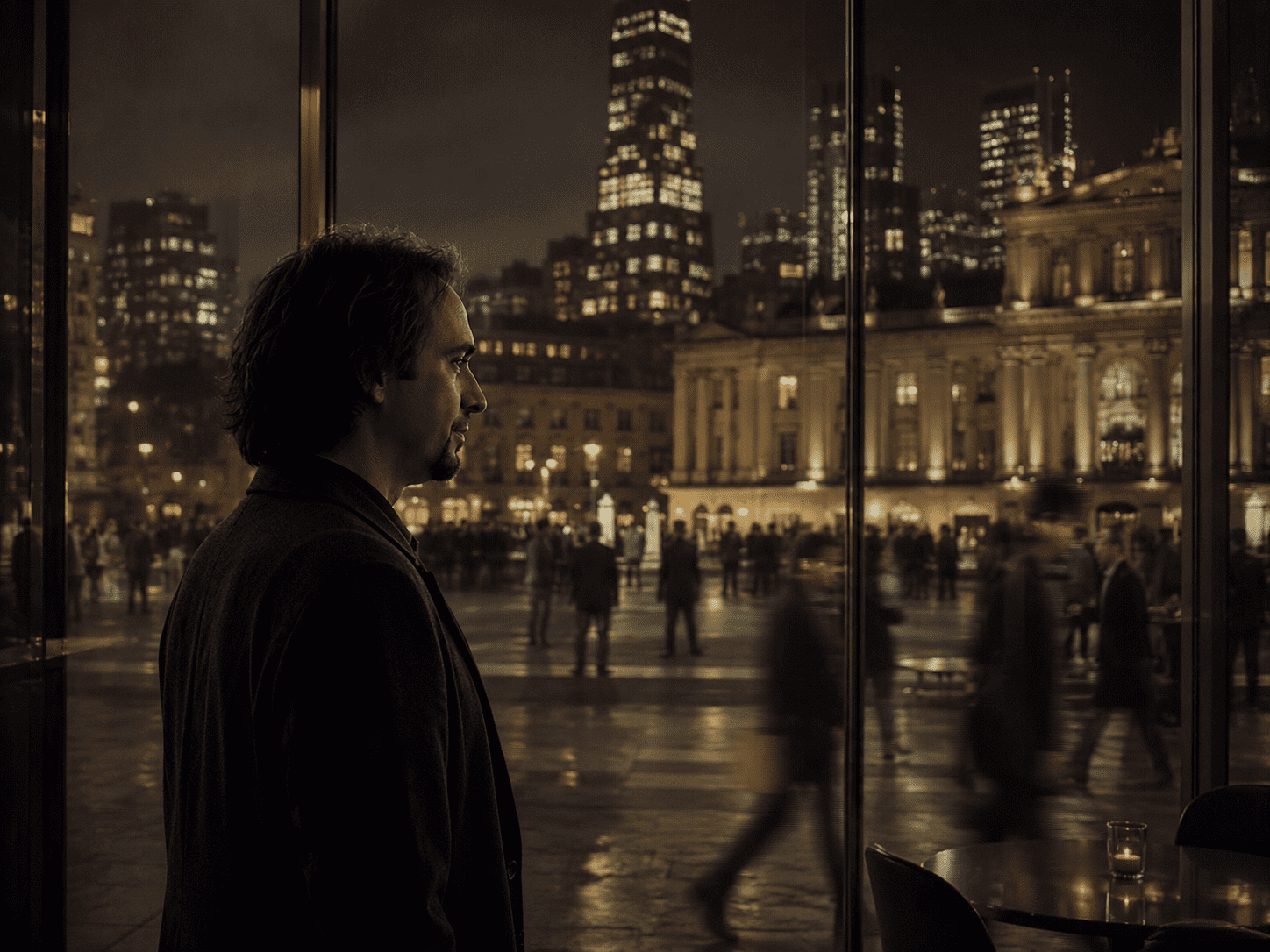
You are already living by some idea of happiness.
It may not be written down. It may not be examined. It may not even be conscious. But it is there.
It shapes what you chase, what you fear, what you envy, what you excuse, what you sacrifice, and what you believe would finally make life work.
That idea may have come from family, education, entertainment, advertising, religion, trauma, success culture, politics, economics, or the people you most wanted to impress.
Some ideas are chosen. Others are absorbed. And once an idea of happiness enters the mind deeply enough, it begins to steer the whole life.
DeINCEPTION asks whether the map you were given is true enough to live by.
The Map Is the Problem
At some point, the problem is no longer your effort. The problem is the map.
Sometimes we keep protecting ourselves from pain while continuing the very pursuit that wounds us.
The modern answer is often to manage the symptoms while leaving the deeper direction unquestioned.
We dull discomfort. We increase distraction. We treat the anxiety, numb the ache, and try to remain functional inside a life that may be organised around a false picture of happiness.
But if the map is wrong, relief is not the same as freedom. Comfort is not the same as truth.
DeINCEPTION asks whether the human person needs more than management. He may need to see the idea that has been governing him.


A Life Interrupted
For John Angheli, the question did not begin as a theory.
It began with an interruption.
After a near-fatal car accident, the ordinary momentum of life stopped. The accident did not give him a new philosophy. It exposed the gap between what he knew and how he had lived.
John had studied psychology, philosophy, education, business, counselling, and the science of motivation. He had accumulated knowledge about the mind, human behaviour, and change.
But the deeper question remained. Had that knowledge made him whole? Had it made him free? Had it made him happy?
The Question That Would Not Leave
“If this had been the end, would I have been happy with the life I lived?”
A Personal Reckoning
The film is not merely an argument. It is a life placed under examination.
John’s story becomes the path into the larger question. The documentary follows a man who had learned many ideas about motivation, change, and the human mind, but who still had to face the harder test of his own life.
Knowledge can describe the problem from a distance. But there are moments when the problem must be lived through, suffered through, and examined without escape.
In DeINCEPTION, the search for happiness is not treated as a lifestyle preference. It becomes a question of truth.

Forty Days Without Escape
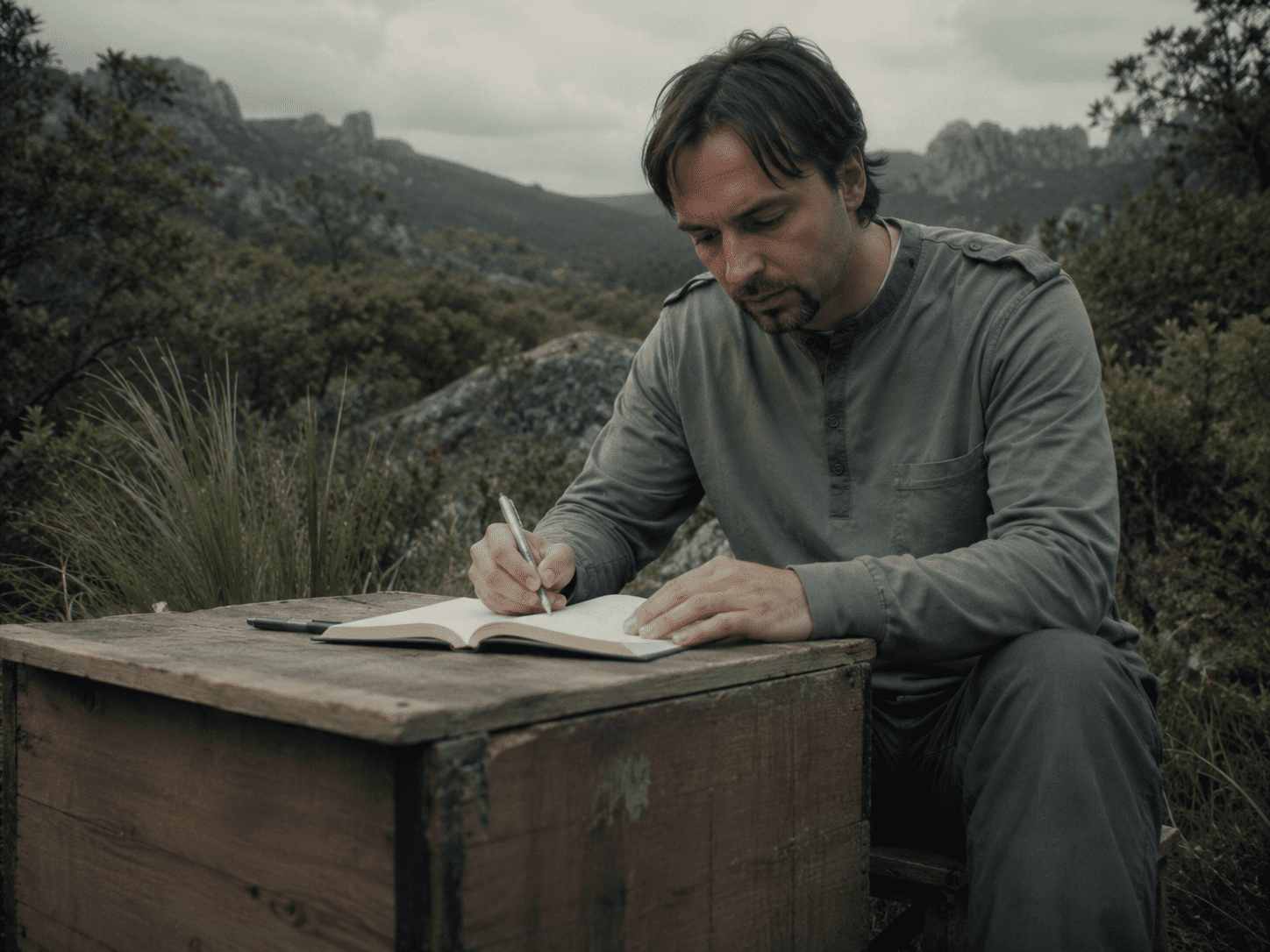
In the wilderness, happiness ceased to be an idea discussed from a distance.
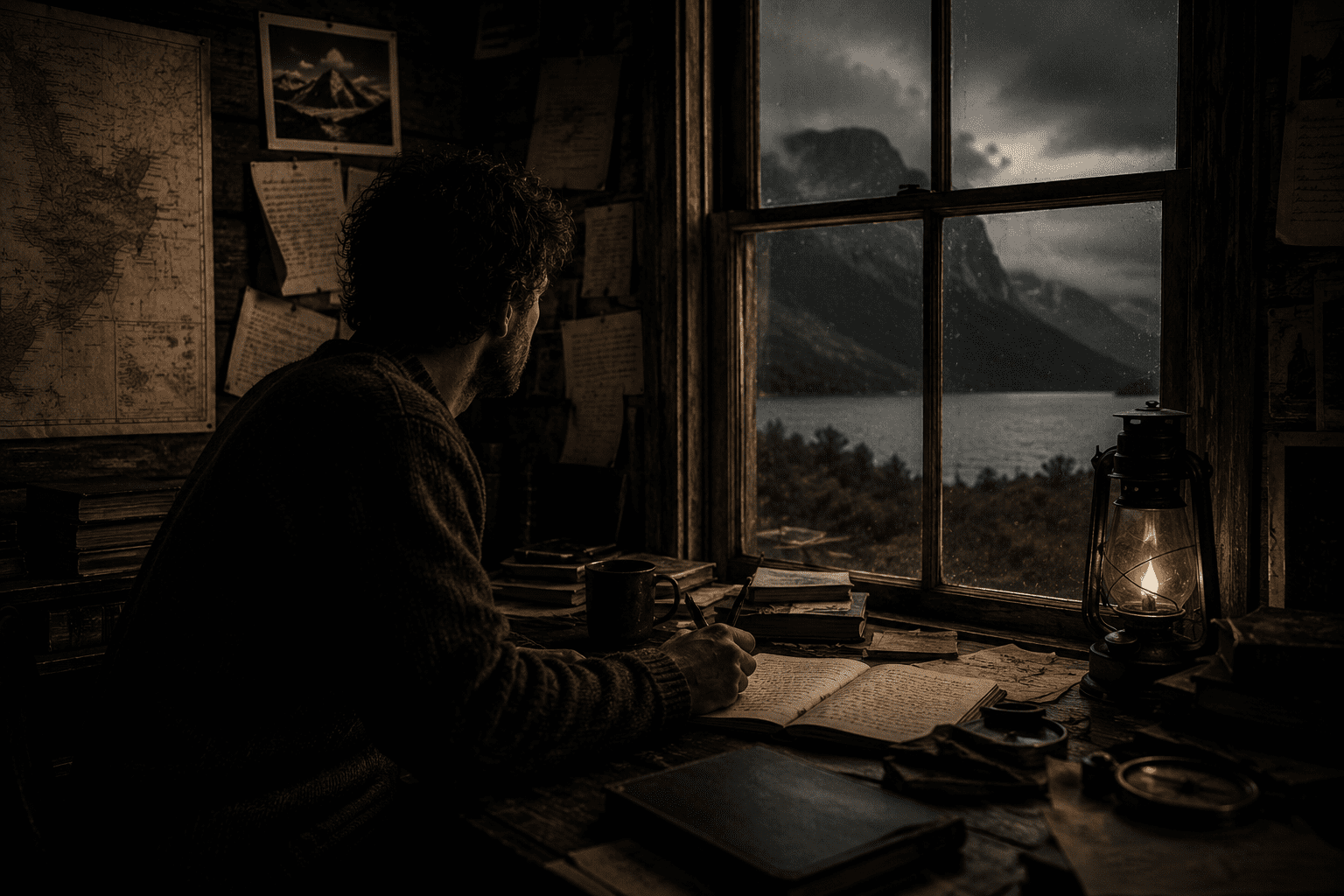
In search of an answer, John entered a 40-day and 40-night solitary ordeal in the Tasmanian wilderness.
There was no familiar room. No public role. No easy entertainment. No ordinary comfort. No quick distraction to soften discomfort.
In the cold, silence, hunger, weather, and long hours alone, happiness became a test.
When Escape Is Removed
There are questions a person cannot answer while constantly escaping himself.
The wilderness removes the normal architecture of distraction. There is no crowd to perform for, no easy rhythm of entertainment, no social approval to lean upon, no familiar schedule to hide inside.
A person becomes more exposed to the life he has lived, the desires that drive him, and the idea of happiness that has been quietly organising his choices.
This is where the documentary becomes more than a story about one man. It becomes an invitation to examine the interior map underneath one’s own life.

Inception and De-Inception
Inception is the planting of an idea. De-inception is the removal of one.
The film asks whether modern culture has planted a reduced picture of happiness inside the human imagination.
- Happiness as pleasure.
- Happiness as comfort.
- Happiness as stimulation.
- Happiness as success.
- Happiness as escape.
- Happiness as private satisfaction.
These things may have their place. But none of them can carry the full weight of a human life.
To exit the dream, you first have to see the idea that made the dream feel real.
The Wrong Map
Imagine walking through Melbourne with a map of New York in your hands.
At first, the map may seem useful. There are streets, buildings, intersections, cafés, parks, signs, and movement everywhere.
So you keep walking. You try harder. You study the map more carefully. You become more disciplined.
But the places you expect to find are not there. The path keeps failing. The destination keeps escaping you.
DeINCEPTION uses this image to examine the modern pursuit of happiness. What if many people are not lost because they lack ambition? What if they are lost because the map they were given does not match the territory of a human life?


When Feeling Good Is Not Enough
What if happiness has been reduced too far?
If happiness is only a feeling, then life becomes organised around chasing pleasant states and avoiding discomfort.
False Comfort
A man may feel good while living falsely. He may be comfortable while moving away from what is good.
True Return
A man may suffer while becoming more truthful. He may be uncomfortable while returning to what is good.
DeINCEPTION asks whether happiness has more to do with truth, order, love, virtue, meaning, responsibility, and reality than with the mood of the moment.
This does not mean life becomes easy. It means the person stops trying to build a life on a false picture of what will make him whole.
The Older Question
What kind of happiness is worthy of a human life?
The film explores the difference between happiness-as-pleasure and happiness-as-virtue; between hedonic happiness and eudaimonic happiness; between feeling good and becoming good.
It draws from philosophy, psychology, personal ordeal, and cultural critique, not to decorate the film with ideas, but to recover questions modern life has learned to avoid.
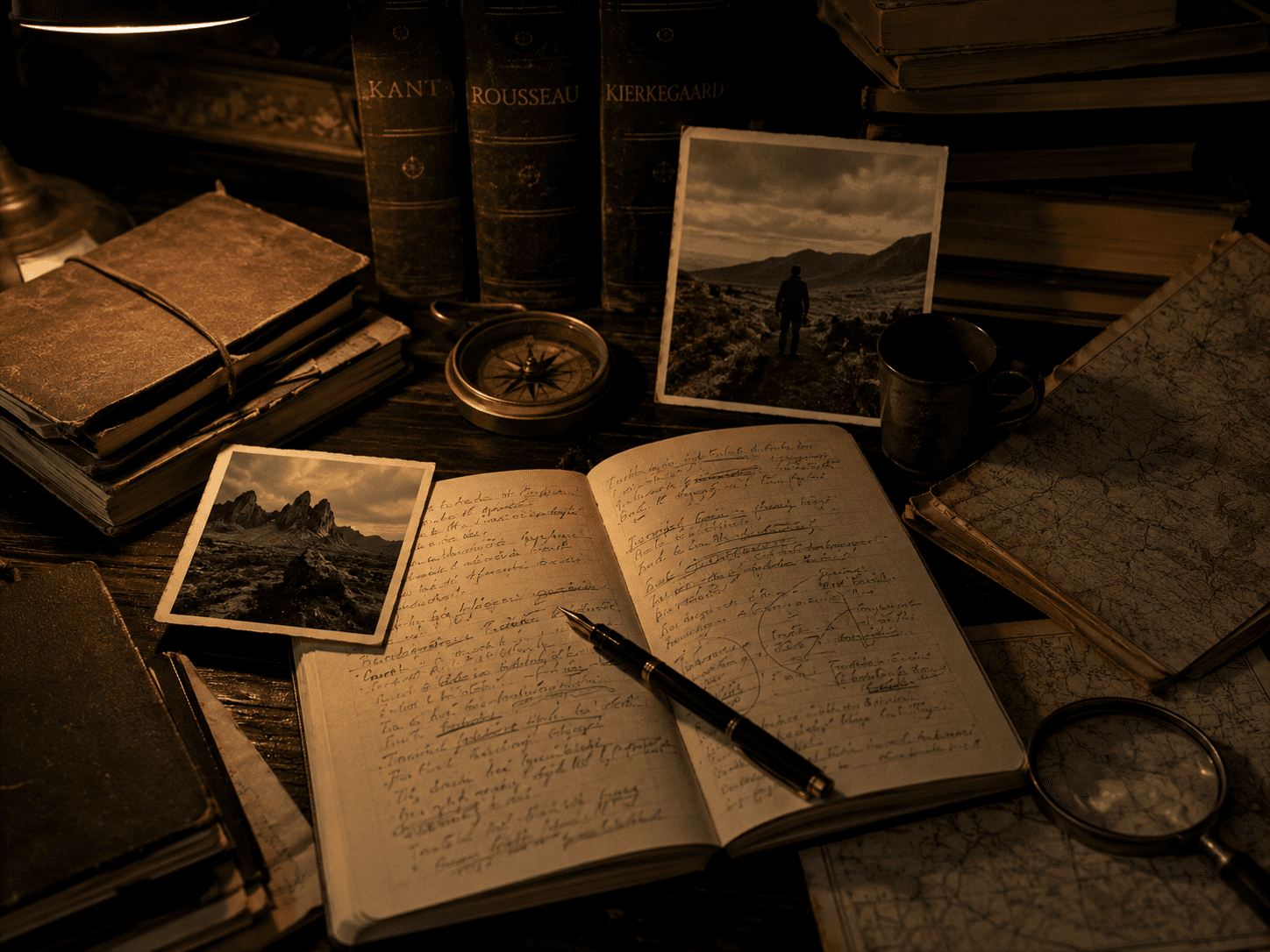
The film brings these questions into conversation with moral and philosophical traditions, including thinkers such as Søren Kierkegaard, Immanuel Kant, and Jean-Jacques Rousseau.

Who the Film Is For
For those who sense that something in the happiness they were sold has not delivered.
For those who have achieved something, yet remain restless. For those who have consumed much, yet feel unfed. For those who have freedom, yet feel inwardly trapped.
For those who have knowledge, yet lack direction. For those who have chased happiness and begun to wonder whether the word itself has been misunderstood.
The film is not offering a quick technique. It is asking you to examine the idea your life has been following.
John’s Story Is the Path. The Question Turns Toward You.
Every person is already making sacrifices for some idea of happiness. Every person is already following a map. The question is whether that map is true.

Watch DeINCEPTION
Face the question for yourself.
What is happiness? What map have you been following? And what would it mean to exit the dream?
Rental and purchase access are for personal viewing. Public screenings, classroom use, institutional use, group events, church events, and hosted screenings should use the Host a Screening option.
Host, Review, or Partner
Some films are watched alone. Others are made to begin a conversation.
DeINCEPTION can be used by schools, universities, churches, leadership groups, counselling communities, cultural forums, and private organisations as a forum for asking what kind of happiness is worthy of a human life.
Host a Screening
Use the film to begin a serious conversation in your school, church, organisation, or community.
Media Resources
Access media information, interview angles, and resources for coverage or review.
Partner With the Film
For educators, podcasters, journalists, organisations, and cultural leaders interested in the question of happiness.
Exit the Dream
The dream does not end because someone explains it.
It ends when a person begins to see the idea that has been governing him.
DeINCEPTION invites you to examine the map your life has been following.
Rental access is for 30 days. Purchase is for ongoing personal digital access. Both include bonus access to the iReawaken Experience.